Smiling Baby Tiger: A Playful Touch for Business Embroidery
First Impressions: Friendly, Quirky, and Versatile
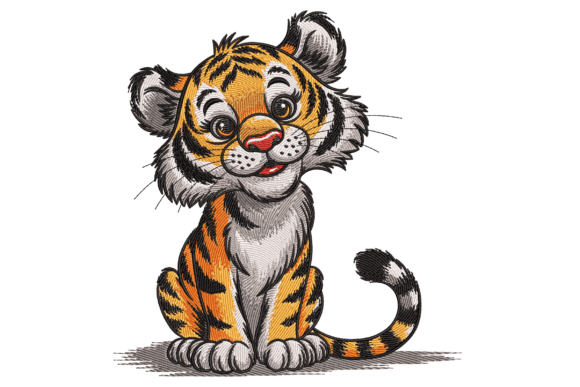
As an embroidery designer, I’m always on the lookout for digital embroidery files that strike a balance between charm and professionalism. The Smiling Baby Tiger design immediately stands out with its playful energy and clean lines. Based on the product title and description, this design falls into the Baby Animals category, but its appeal extends beyond nurseries and children’s wear. It feels like a strong contender for small business merch, boutique branding, and custom apparel that wants to inject a bit of personality without sacrificing visual consistency.
Perfect for Branded Merchandise and Embroidered Patches
When evaluating a machine embroidery design for business use, the first question is always: does it scale well across different applications? The Smiling Baby Tiger has a bold outline and expressive features that make it a natural fit for embroidered patches. Whether used as a chest logo accent on staff uniforms or as a sleeve detail on boutique merchandise, this design holds its own. It’s especially well-suited for Etsy sellers and crafters who want to offer a handmade product with a touch of whimsy.
For small businesses like cafés, bakeries, or local pet brands, this design can be a conversation starter. Imagine a tote bag with the Smiling Baby Tiger embroidered in bright thread colors—perfect for event merch or customer gifts. It’s also a great option for product packaging accents or branded product add-ons, especially when you want to convey approachability and fun.
Real-World Use: Caps, Aprons, Tote Bags, and More
One of the key strengths of the Smiling Baby Tiger is its adaptability. When testing this design across various items, it performed well on different fabric textures and garment types. On a cap front, the design maintains clarity and doesn’t get lost in the curve of the fabric. For apron embroidery, the quirky flair adds a personal touch that resonates with handmade brands or creative studios looking to enhance their visual identity.
It’s also effective on tote bags and work shirts. In both cases, the design stands out without overwhelming the item. For commercial embroidery projects, this machine embroidery design works well as part of a larger brand identity system—especially when paired with complementary design assets. It’s ideal for businesses that want to maintain a consistent visual language across their merchandise while still standing out from the crowd.
Where to Use with Care
Like any design, Smiling Baby Tiger has its limitations. It’s best used with consideration for fabric texture and placement. On dark uniforms, thread color contrast becomes critical—especially for maintaining the expressive eyes and smile that give the tiger its charm. When used on curved surfaces like cap fronts or sleeves, the stitch density and spacing need to be checked carefully to avoid distortion.
Also, be cautious when reducing the design for small patch sizes. The facial details may not hold up well if scaled down too much. It’s always a good idea to test the embroidery file on a sample fabric before committing to large-scale production. If you're planning to use it for product packaging accents or printable mockups, ensure the hoop size and stitch density are appropriate for the intended application.
Impact on Brand Identity and Customer Engagement
For small businesses, visual consistency is key to building brand recognition. The Smiling Baby Tiger offers a unique opportunity to create a memorable brand identity through custom apparel and merch. Its playful nature makes it ideal for brands that want to feel approachable and personable, while still maintaining a level of professionalism.
When used thoughtfully, this design can boost customer trust and engagement. It adds value to the finished product, whether that’s a tote bag sold in a boutique or an embroidered patch on a uniform. For Etsy sellers and handmade brands, it’s a way to differentiate from generic logos and mass-produced designs. It brings a sense of authenticity and craftsmanship that resonates with buyers looking for something special.
Practical Designer Notes for Best Results
Before using the Smiling Baby Tiger in a commercial embroidery project, there are several practical steps every designer should take:
- Test it in black and white first to evaluate contrast and clarity.
- Check if it works at small patch size—especially if you're creating embroidered patches for keychains or labels.
- Review thread color contrast for dark fabrics and high visibility.
- Inspect spacing and stitch density to avoid issues on curved surfaces or textured fabric.
- Confirm hoop size and fabric compatibility before production.
- Test on real fabric to see how the design behaves in a real-world setting.
- Use proper stabilizer to ensure clean, crisp results.
- Create a mockup for client approval—especially when used as part of a larger brand identity package.
- Compare it beside other design assets to ensure visual consistency across merchandise.
- Confirm commercial licensing before using it for small business merch or resale.
These steps will help ensure that the Smiling Baby Tiger enhances your project rather than complicates it. As with any embroidery file, attention to detail is what separates a good design from a great one.
Final Thoughts: A Versatile Design with Personality
In conclusion, the Smiling Baby Tiger is more than just a cute design—it’s a versatile tool for small business owners, embroidery shops, and product designers looking to elevate their branded merchandise. Its friendly personality makes it ideal for businesses that want to connect with customers on an emotional level, while its clean lines and bold features ensure it works well across a range of applications.
Whether you're creating custom apparel for a boutique, embroidered patches for a local café, or branded product add-ons for Etsy, this machine embroidery design has the potential to become a staple in your design toolkit. Just remember to test thoroughly, evaluate carefully, and use it in a way that aligns with your brand identity.